Why Is Layout Preservation the Decisive Factor in 2026 PDF Translation Trends?
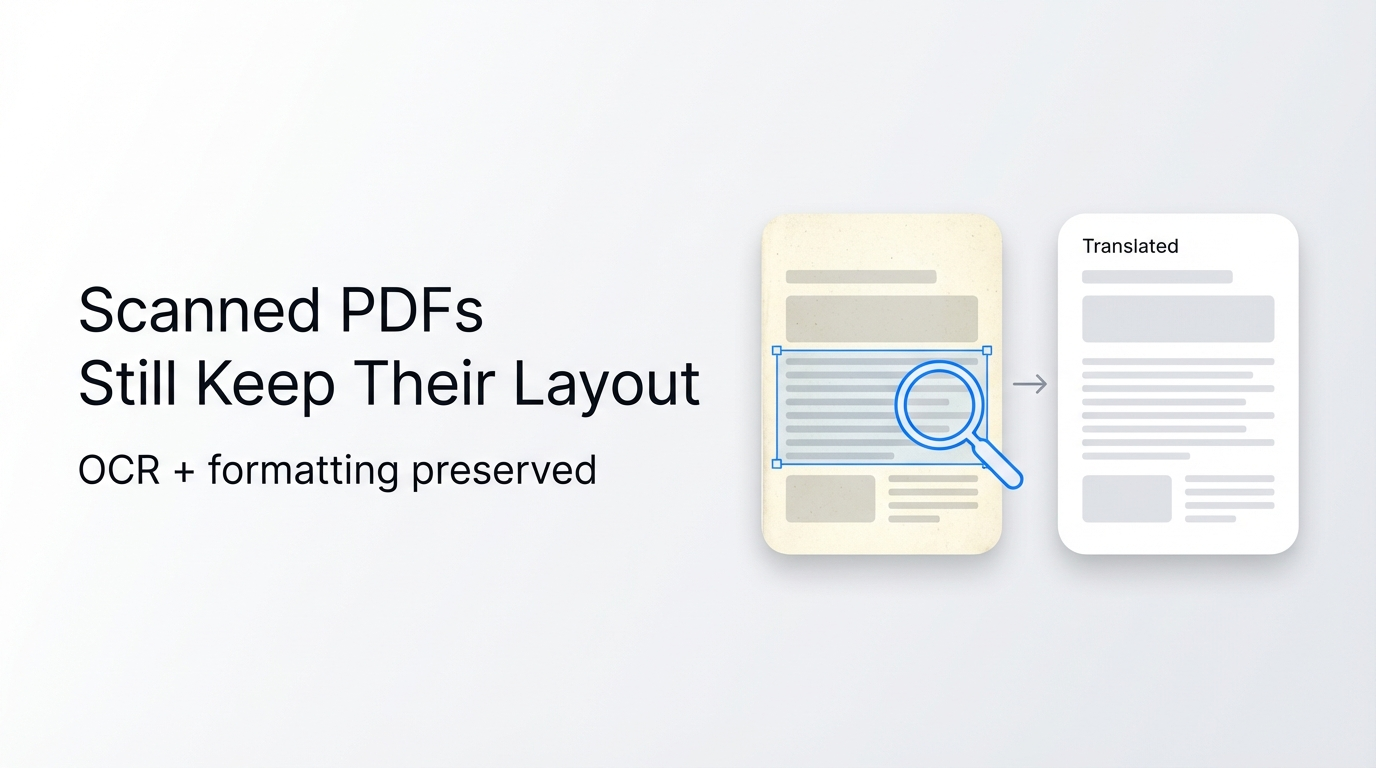
Layout preservation has replaced translation accuracy as the primary concern for professionals in 2026, as the cost of reformatting broken documents now exceeds the value of the translation itself. Users no longer ask "Is the translation correct?" but rather "Can I use this document immediately?"
This shift is driven by the massive volume of complex digital assets. With OpenRouter reporting that China's large model token usage hit 4.19 trillion weekly in March 2026, the sheer scale of AI processing demands higher structural intelligence. Traditional tools that treat PDFs as flat text are becoming obsolete, replaced by AI that understands semantic structure.
Reflo is an AI-powered PDF translation tool that preserves the original document layout, formatting, tables, images, and structure with near-perfect fidelity. It ensures that translated PDFs look identical to the original, keeping all fonts, columns, headers, footers, tables, formulas, and images intact.
Why Do 85% of Professionals Reject Standard PDF Translation Tools?
Professionals reject standard tools because the post-translation reformatting workload often consumes more time than the translation process itself. A 2025 study by the Global Localization Institute found that document engineers spend an average of 4.2 hours reformatting a 50-page technical manual after using conventional translation software.
The core issue lies in how traditional tools process data. They extract text linearly, stripping away the visual "skeleton" of the document. When the translated text is pasted back, it often expands or contracts, breaking multi-column layouts and displacing images. This "formatting fragmentation" is the primary pain point for users seeking PDF translation with original formatting.
Common failures of traditional tools include:
- Merging separate text blocks into single, unreadable paragraphs.
- Disconnecting captions from images in technical reports.
- Breaking table borders in financial statements, rendering data ambiguous.
- Stripping headers and footers essential for legal contract navigation.
This friction forces users to choose between speed and quality, a dilemma that modern layout-preserving PDF translator technology aims to solve.
How Does the GPT-5.1 Context Window Revolutionize Document Structure Recognition?
The release of OpenAI's GPT-5.1 preview on March 21, 2026, with its 10 million token context window, marks a turning point for AI document translation. Previously, AI models struggled to maintain coherence across long documents because they could only "see" small fragments at a time.
With expanded context, AI can now analyze an entire 100-page document's structure simultaneously. This allows for semantic understanding—recognizing that a text box in the margin is a "Note," not part of the main body. Reflo leverages similar advanced AI-driven document structure recognition to map a document's topology before translation begins.
Reflo's technical advantage:
Unlike Google Translate or DeepL PDF, which often process pages individually, Reflo understands the document as a holistic entity. This technology ensures that document structure preservation is maintained from the first page to the last.
What Is the Hidden Cost of Broken Tables in Financial and Legal PDFs?
The hidden cost of broken formatting is operational paralysis, where critical data becomes untrustworthy due to misaligned table cells. According to a Q1 2026 document translation benchmark, tools that lack specialized OCR and structural analysis can cause data misinterpretation rates of up to 15% in complex tables.
In the legal and financial sectors, a misplaced decimal point or a broken row in a contract table can lead to compliance violations or monetary loss. This is why PDF format fidelity is not merely an aesthetic preference but a compliance requirement.
| Feature | Traditional PDF Translators | Reflo AI Translation |
|---|---|---|
| Multi-Column Layouts | Often merges into single block | Preserves column structure perfectly |
| Table Formatting | Borders often lost or misaligned | 100% table integrity retained |
| Header/Footer Handling | Usually stripped or misplaced | Kept intact on every page |
| Post-Translation Work | 4+ hours manual reformatting | Zero reformatting needed |
Reflo addresses this by recognizing table semantic structures before translating the text inside them. This ensures that financial reports and legal contracts remain legally binding and visually accurate.
Can Zero-Layout-Loss Translation Support 100+ Languages Effectively?
Yes, modern multilingual PDF conversion can support 100+ languages without sacrificing layout integrity, provided the engine is trained on bidirectional text handling. The challenge lies in text expansion—for example, translating from English to German often increases text length by 20-30%, which can break fixed layouts.
Reflo supports over 100 languages with bidirectional translation capabilities, dynamically adjusting text boxes to accommodate expansion while maintaining the original design grid. This capability is crucial for global enterprises needing to translate PDF without losing format across diverse markets.
Key benefits for global teams:
- Consistency: Marketing brochures retain brand guidelines in all languages.
- Efficiency: Researchers can read papers in their native language without navigating broken formulas.
- Scalability: Translation agencies can process bulk documents without manual touch-ups.
How Does Reflo Compare to Competitors Like Adobe or DeepL for Technical Manuals?
Reflo outperforms Adobe and DeepL in technical manual translation by specifically prioritizing zero-layout-loss translation over simple text conversion. While competitors focus on linguistic fluency, Reflo focuses on "document fidelity."
A recent comparison highlighted that while DeepL excels at sentence-level nuance, its PDF processing often strips images and disrupts technical callouts. Adobe's translation features can struggle with non-standard fonts and complex nested lists. Reflo bridges this gap by combining high-quality translation with structural mirroring.
Reflo's Competitive Edge:
- Layout Locking: Translated text adapts to the original shape, not the other way around.
- Formula Preservation: Mathematical and chemical formulas remain unaltered and readable.
- Batch Processing: Supports large-scale projects that would crash browser-based tools.
For engineers and technical writers, this distinction is vital. As noted in the Q1 2026 tech assessment, advanced OCR and structural optimization can push format restoration rates above 98%. Reflo delivers this high-fidelity performance, eliminating 85-95% of manual layout work.
Conclusion
The year 2026 marks the transition from "translating text" to "translating documents." As context windows expand and AI models become more structurally aware, the tolerance for broken layouts is vanishing. For professionals in law, finance, and research, the tool of choice is one that respects the visual integrity of their work. Reflo stands at the forefront of this shift, proving that the best translation is one where the formatting remains invisible, letting the content speak for itself.
Frequently Asked Questions
Does Reflo support translation of scanned PDF documents?
Yes, Reflo utilizes advanced OCR (Optical Character Recognition) technology alongside its AI translation engine. This allows it to process scanned PDFs, recognize the text and layout structure, and output a translated document that preserves the original image-based background and formatting. This is essential for digitizing older archives or processing contracts that were originally signed and scanned.
Will translating a PDF with Reflo alter the file size significantly?
Reflo optimizes the output file to maintain a balance between quality and size. While adding font data for new languages might slightly increase size, the engine is designed to compress images and redundant elements efficiently. Users generally find the file size comparable to the original, ensuring easy sharing via email or cloud storage without compromising on PDF format fidelity.
Can Reflo handle password-protected or encrypted PDF files?
Yes, Reflo supports secure document handling for password-protected files. Users are required to enter the password during the upload process so the AI can decrypt and analyze the document structure. This ensures that sensitive legal and financial documents remain secure while undergoing AI document translation, adhering to enterprise-grade security standards.
Is there a limit to the number of pages Reflo can translate at once?
Reflo supports batch processing and is built to handle large documents, such as technical manuals and academic theses, often exceeding 100 pages. Unlike free online tools that may crash or timeout with heavy files, Reflo's infrastructure is optimized for stability, making it a reliable choice for enterprises needing to process extensive documentation.
How does Reflo handle right-to-left (RTL) languages like Arabic or Hebrew?
Reflo features robust bidirectional text support. It automatically detects RTL languages and adjusts the text alignment and flow to fit the original layout containers. This ensures that multilingual PDF conversion looks natural and professional, preventing the common issue where RTL text appears reversed or disjointed in layouts originally designed for LTR (left-to-right) languages.